
MRCPsych Exam Guidance
MRCPsych Paper A vs Paper B: Key Differences Every Candidate Should Know
Read the complete MRCPsych examinations guide (pillar article).
A side-by-side comparison of content, eligibility, study methods and examination strategy.
Why candidates confuse the two papers
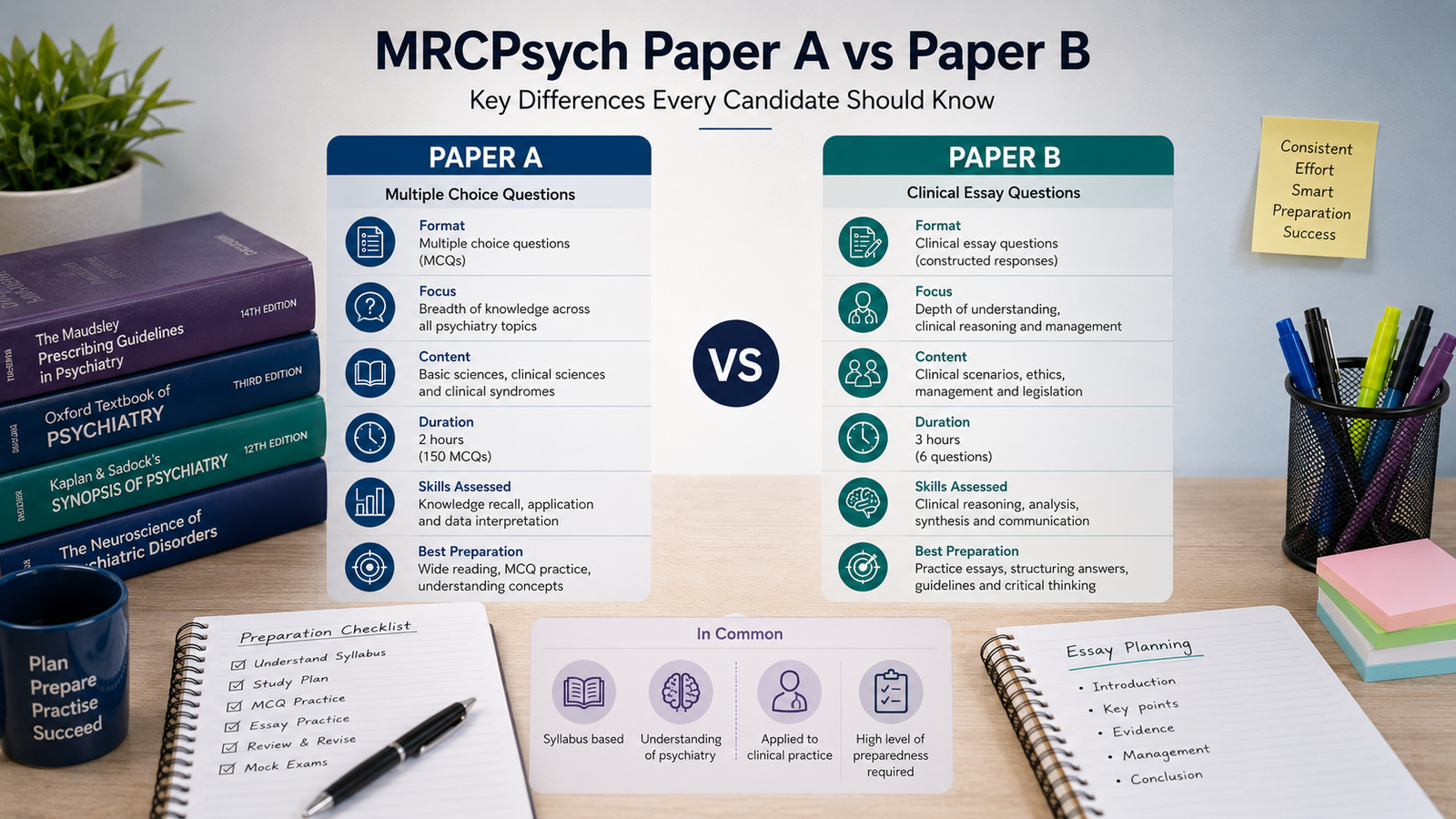
Paper A and Paper B share the same broad examination format, so they can initially appear similar. Both are three-hour written examinations containing 150 questions, with approximately two-thirds single-best-answer MCQs and one-third extended matching items. However, they assess different stages of psychiatric knowledge and require different preparation styles. Paper A asks whether the candidate understands the scientific and theoretical foundations of psychiatry. Paper B asks whether the candidate can apply clinical knowledge across psychiatric specialties and interpret evidence through critical review.
Paper A and Paper B at a glance
The Paper A mindset Paper A rewards precise conceptual understanding. Candidates need to distinguish closely related receptors, pathways, theories, developmental stages, psychological constructs and diagnostic principles. The most efficient resources make these differences visible through tables, diagrams, clinical examples and concise explanations. Question practice should begin early because the challenge is often not absence of knowledge but confusion between plausible options. An error log should record the exact distinction that changed the answer. The Paper B mindset Paper B requires clinical sequencing and evidence-based judgement. A candidate may know that several treatments are effective but still need to identify the best next step for a particular patient. Questions may depend on urgency, contraindications, previous treatment, comorbidity, age, risk, capacity or service context. Critical review adds a second reasoning layer. Candidates must interpret how a study was designed, whether the result is trustworthy and whether the effect is clinically meaningful. This is why Paper B preparation should include cases, algorithms, research interpretation and mixed questions.
Which paper should you take first?
Paper A is commonly taken first because it provides a scientific base and has broader eligibility. However, the correct decision depends on your training status, experience, available dates and personal readiness. Candidates should confirm the current Royal College regulations rather than relying on another candidate's pathway. Passing one written paper begins the current six-year validity period for completing the remaining components. This makes examination timing an important strategic decision: apply when you can prepare properly, not simply because a diet is available.
How study resources should differ
Can the same study plan be used for both?
The overall learning cycle can be the same: learn, retrieve, practise, analyse and simulate. The content of each stage should differ. Paper A revision may devote more time to diagrams, flashcards and contrast tables. Paper B requires more cases, treatment algorithms, research interpretation and cross-specialty integration. The common mistake is using passive reading for both. Neither paper is best prepared through reading alone. The examination demands recognition, discrimination and decision-making under time pressure.
How Medfortune structures the two courses
Medfortune Academy provides separate Paper A and Paper B learning pathways so candidates can focus on the skills each paper requires. Both use the PentaMatrix Framework, but the clinical examples, comparison tables, exam relevance and practice questions are tailored to the relevant syllabus. The seven-day free trial allows candidates to explore the organisation and teaching style before choosing a course. Candidates preparing for both papers should still set separate revision milestones and avoid combining the syllabi into an unmanageable single plan.
Decision checklist
Confirm eligibility for the examination you intend to take. Check the application window and whether your preparation time is realistic. Review the syllabus and complete a diagnostic question set. Choose resources designed for the specific paper rather than generic psychiatry revision. Consider the six-year completion period after the first written pass. Plan for full-length mock examinations before the application or cancellation deadlines.
Frequently Asked Questions
Are Paper A and Paper B the same length?
Yes. Under the current format, each paper lasts three hours and contains 150 questions worth 150 marks.
Is Paper B harder than Paper A?
They are difficult in different ways. Paper A contains detailed scientific knowledge; Paper B combines broad clinical psychiatry with critical review. Individual background strongly affects perceived difficulty.
Does Paper A contain clinical questions?
Paper A focuses on scientific and theoretical foundations, but questions may use clinical contexts to test those principles.
Does Paper B include psychopharmacology?
Clinical psychopharmacology is central to many Paper B management questions, even though the dedicated scientific psychopharmacology domain belongs to Paper A.
Can I use one question bank for both papers?
Use resources mapped to the specific syllabus. A combined bank may be useful only when questions are clearly categorised and current.
Sources and verification links
Royal College of Psychiatrists - Preparing for exams
Royal College of Psychiatrists - Can I take an exam?
Royal College of Psychiatrists - Papers A and B marking scheme
Royal College of Psychiatrists - Applying for your exam
Next step
Compare Medfortune Paper A and Paper B courses